
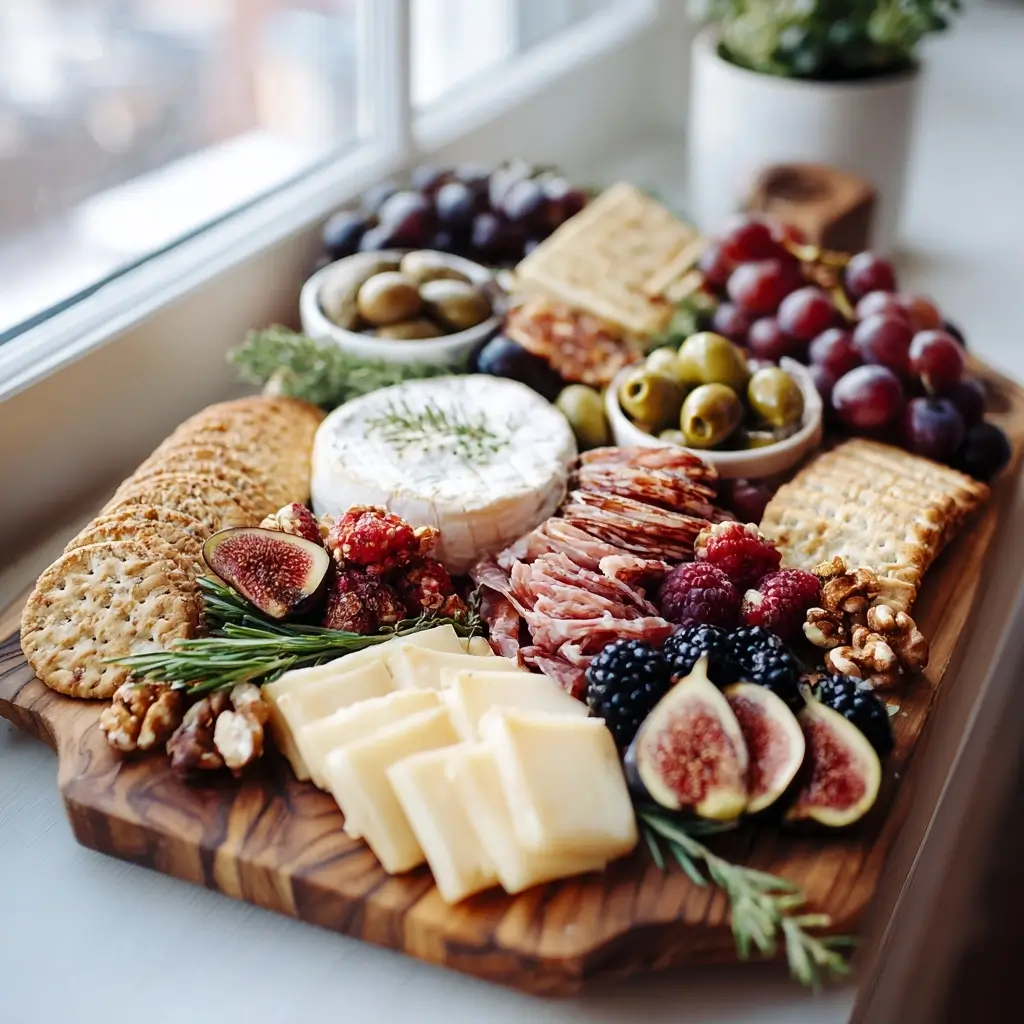
If you want your board to look polished without a lot of extra work, these charcuterie board garnish ideas are the easiest place to start. A few well-placed fresh herbs, fruit, nuts, and colorful extras can make even a simple spread feel thoughtful and inviting.
Charcuterie Board Garnish Ideas
Instructions
- Start by deciding how you want the board to feel. Pick two or three main colors, then build from there with fruit, herbs, nuts, and small accents.
- Place the biggest items around the board before filling in the gaps. Grapes, figs, small bowls, and clusters of herbs help create structure right away.
- Scatter berries, nuts, dried fruit, and pickles in open spaces. These little details keep the board from looking empty and help everything feel balanced.
- Try combining soft fruit with crunchy nuts and crisp crackers. A mix of textures makes the board more appealing and easier to enjoy.
- Slip rosemary or thyme into a few spots, then add one final detail like edible flowers, pomegranate seeds, or a small dish of jam. That last bit brings everything together beautifully.
Notes
Why You’ll Love This Charcuterie Board Garnish Ideas
This guide is all about simple styling that feels natural, not fussy. You can use these ideas with cheese boards, snack boards, and appetizer platters, and most of the garnishes are easy to find at any grocery store.
They also help balance flavor, color, and texture. A little green, a pop of fruit, and a few crunchy accents can make the whole board look more abundant and welcoming.
Charcuterie Board Garnish Ideas Ingredients & Substitutions
- Fresh herbs, like rosemary, thyme, sage, or mint, for color and a fragrant finish
- Fresh fruit, like grapes, figs, berries, apple slices, pear slices, or pomegranate seeds
- Dried fruit, like apricots, cranberries, cherries, or dates, for a chewy sweet contrast
- Nuts, like almonds, walnuts, pistachios, or pecans, for crunch and texture
- Pickled vegetables, like cornichons, olives, or pickled onions, for a savory, tangy bite
- Crackers and breadsticks, for filling small spaces and adding height
- Edible flowers, if available, for a delicate finish
- Honey, fig jam, or fruit preserves, for small bowls that add shine and sweetness
- Optional chocolate pieces or cookies, if you want to lean into a dessert-style board
Substitutions are easy here. If one fruit is out of season, use whatever looks freshest. If you do not have fresh herbs, a few leaves of basil or mint can still add a lovely touch.
Step-by-Step Instructions to Make Charcuterie Board Garnish Ideas
Step 1, Choose your color palette
Start by deciding how you want the board to feel. Pick two or three main colors, then build from there with fruit, herbs, nuts, and small accents.
Step 2, Add your larger garnish pieces first
Place the biggest items around the board before filling in the gaps. Grapes, figs, small bowls, and clusters of herbs help create structure right away.
Step 3, Layer in the smaller accents
Scatter berries, nuts, dried fruit, and pickles in open spaces. These little details keep the board from looking empty and help everything feel balanced.
Step 4, Mix textures for interest
Try combining soft fruit with crunchy nuts and crisp crackers. A mix of textures makes the board more appealing and easier to enjoy.
Step 5, Finish with fresh herbs and one special touch
Slip rosemary or thyme into a few spots, then add one final detail like edible flowers, pomegranate seeds, or a small dish of jam. That last bit brings everything together beautifully.
Tips for Success
Use odd numbers when placing small groupings, since they often look more natural. Let some items overlap slightly so the board feels full and abundant.
If you are styling ahead of time, keep delicate fruit and herbs separate until the last minute. That helps everything stay fresh and attractive.
Also, think about height. A few taller herbs, stacked crackers, or folded slices can make the board look more dynamic without much effort.
Variations of Charcuterie Board Garnish Ideas
For a bright spring look, use strawberries, mint, and edible flowers. For autumn, try figs, pears, walnuts, and rosemary.
If you want a sweeter board, add chocolate pieces, cookies, dried cherries, and berries. For a savory version, lean into olives, pickles, herbs, and toasted nuts.
You can also make a themed board around color. All green, all berry-toned, or a warm neutral palette can be especially pretty for a party table.
Serving Suggestions: What to Pair with Charcuterie Board Garnish Ideas
These garnishes work well with cheese boards, appetizer platters, brunch spreads, and even dessert tables. They pair nicely with fresh bread, sliced cheese, dips, spreads, and simple crackers.
If you are serving a larger gathering, set out small cheese knives, toothpicks, and napkins nearby. That makes the board feel easy and guest-friendly.
Storage & Reheating Instructions
Most garnishes are best assembled just before serving. If you need to prep ahead, wash and dry herbs, portion nuts and dried fruit, and store fresh fruit separately in airtight containers.
Keep the board refrigerated if it contains cheese, fruit, or other perishable items. There is no reheating needed, just let chilled items sit briefly at room temperature before serving for the best flavor.
Memories Made Around the Table
Some of the most memorable gatherings are the ones where everyone keeps circling back to the board, picking a little of this and a little of that. A beautifully styled spread invites people to linger, chat, and enjoy the moment together.
FAQs
What are the best garnishes for a charcuterie board?
Fresh herbs, grapes, berries, figs, nuts, olives, and pickled vegetables are some of the best options. They add color, texture, and variety without much extra effort.
How do I make a charcuterie board look fuller?
Fill small gaps with nuts, dried fruit, crackers, or herb sprigs. Layering items and using a few bowls also helps the board feel abundant.
Can I prepare a charcuterie board ahead of time?
Yes, but keep delicate ingredients separate until close to serving. Fruit, herbs, and crackers stay fresher when assembled at the last minute.
What colors work best on a charcuterie board?
Mixing greens, reds, purples, and golden tones usually creates the most appealing look. A balanced color mix makes the board feel lively and inviting.
Final Thoughts
These charcuterie board garnish ideas are proof that a few simple touches can make a big difference. With fresh herbs, colorful fruit, and a little texture, you can turn any board into something that feels special and ready to share.