
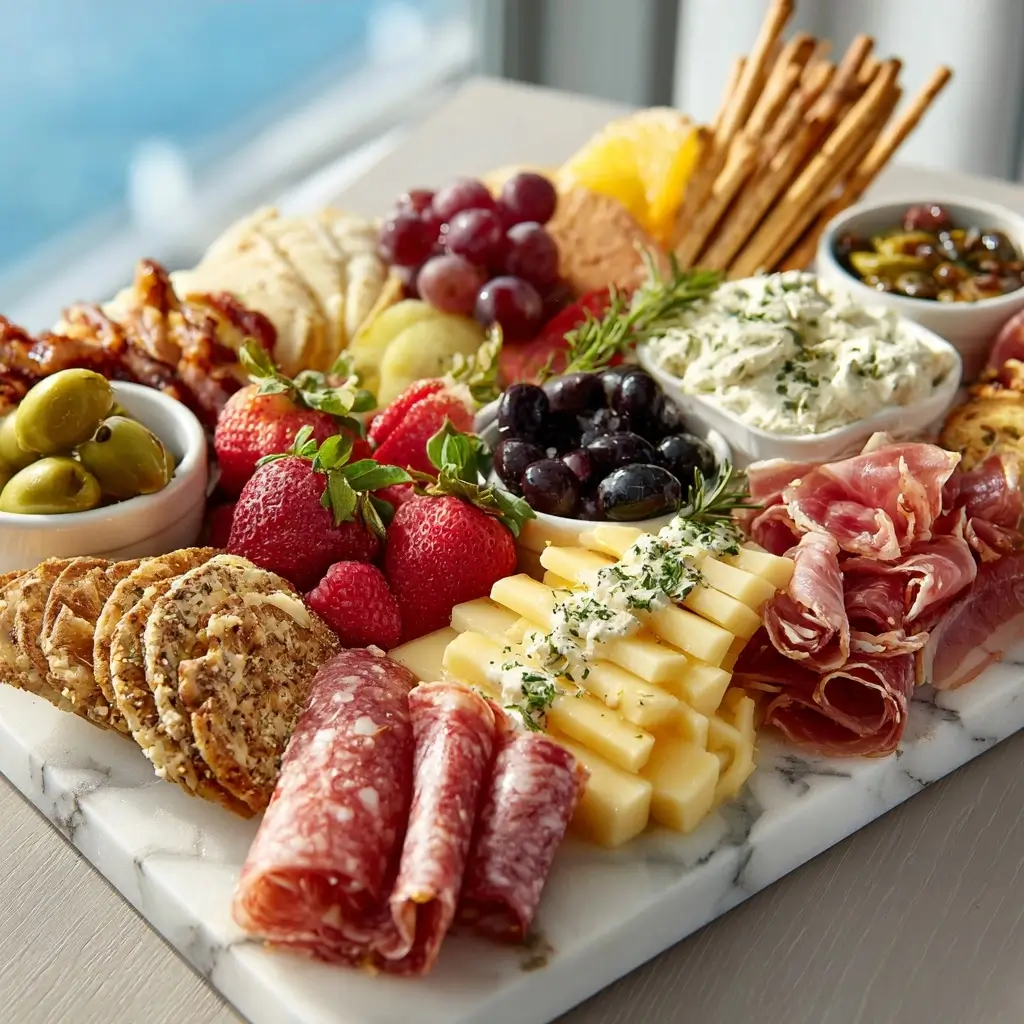
If you love building a beautiful board, this charcuterie board cheese guide will help you choose great cheeses and arrange them with confidence. I like to keep things simple, balanced, and a little bit playful, so every bite feels special.
Charcuterie Board Cheese Guide
Equipment
- 1 Wooden board, platter, or large tray
- 1 Small bowls for honey, jam, or olives
Ingredients
Cheeses
- Soft cheese Brie, Camembert, or creamy goat cheese
- Semi-soft cheese Havarti, fontina, or gouda
- Hard cheese Aged cheddar, Manchego, or Parmesan
- Bold cheese Blue cheese or sharp aged cheese
Accompaniments
- Crackers and bread Crostini, seeded crackers, or sliced baguette
- Fresh fruit Grapes, figs, berries, or sliced apples
- Dried fruit Apricots, dates, or cranberries
- Crunchy extras Nuts, olives, or pickled vegetables
- Sweet touch Honey, jam, or fruit preserves
Instructions
- Pick 3 to 5 cheeses with different textures and strengths. I like to include one mild cheese, one creamy cheese, one firm cheese, and one with a little more character.
- Set out a wooden board, platter, or large tray. Place small bowls first for honey, jam, olives, or other loose ingredients so they anchor the layout.
- Space the cheeses around the board instead of grouping them all in one area. If a cheese is soft, leave it whole or cut a small wedge so guests can easily serve themselves.
- Fill in the open spaces with crackers, sliced bread, fruit, nuts, and dried fruit. Try to mix colors and shapes so the board looks full and inviting.
- Drizzle honey over a cheese if you like, add fresh herbs for color, and tuck in one or two extra garnish pieces. These little details make the whole board feel thoughtful and welcoming.
Notes
Why You’ll Love This Charcuterie Board Cheese Guide
This guide makes it easy to build a board that looks inviting and tastes well balanced. You will get helpful pairing ideas, smart texture combinations, and an easy way to arrange everything so the board feels abundant without being crowded.
Charcuterie Board Cheese Guide Ingredients & Substitutions
Start with a mix of cheeses that bring different textures and flavors to the board. A good board usually includes something mild, something creamy, and something bold.
- Soft cheese: Brie, Camembert, or a creamy goat cheese
- Semi-soft cheese: Havarti, fontina, or gouda
- Hard cheese: Aged cheddar, Manchego, or Parmesan
- Bold cheese: Blue cheese or sharp aged cheese
- Crackers and bread: Crostini, seeded crackers, or sliced baguette
- Fresh fruit: Grapes, figs, berries, or sliced apples
- Dried fruit: Apricots, dates, or cranberries
- Crunchy extras: Nuts, olives, or pickled vegetables
- Sweet touch: Honey, jam, or fruit preserves
Easy substitutions: If you cannot find a certain cheese, swap in another from the same texture group. For a softer option, use cream cheese with herbs. For a sharper flavor, use aged cheddar or a crumbly sheep’s milk cheese. If you want a different spread, try apple butter or fig jam.
Step-by-Step Instructions to Make Charcuterie Board Cheese Guide
Step 1: Choose your cheeses
Pick 3 to 5 cheeses with different textures and strengths. I like to include one mild cheese, one creamy cheese, one firm cheese, and one with a little more character.
Step 2: Prep the board
Set out a wooden board, platter, or large tray. Place small bowls first for honey, jam, olives, or other loose ingredients so they anchor the layout.
Step 3: Place the cheeses
Space the cheeses around the board instead of grouping them all in one area. If a cheese is soft, leave it whole or cut a small wedge so guests can easily serve themselves.
Step 4: Add the supporting snacks
Fill in the open spaces with crackers, sliced bread, fruit, nuts, and dried fruit. Try to mix colors and shapes so the board looks full and inviting.
Step 5: Finish with small touches
Drizzle honey over a cheese if you like, add fresh herbs for color, and tuck in one or two extra garnish pieces. These little details make the whole board feel thoughtful and welcoming.
Tips for Success
Keep cheese at room temperature for about 20 to 30 minutes before serving, so the flavors open up nicely. Cut a few slices in advance, but leave some pieces whole so the board still looks generous. If you are serving a crowd, plan on offering at least one cheese people already know and love.
Variations of Charcuterie Board Cheese Guide
You can build a board around a theme if you want to make it more personal. Try a fruit forward board with berries, grapes, and honey, or a savory board with olives, nuts, and pickled vegetables. For a cozy winter spread, add spiced nuts, dried figs, and a sharp cheddar. For a fresh spring look, use herbs, radishes, and soft cheeses.
Serving Suggestions: What to Pair with Charcuterie Board Cheese Guide
Serve your board with sparkling water, grape juice, iced tea, or a light fruit spritzer. It also pairs nicely with a simple salad, a soup course, or crusty bread on the side. If you are hosting, place the board near the drinks so guests can graze comfortably.
Storage & Reheating Instructions
Store leftover cheese wrapped tightly in parchment or wax paper, then place it in an airtight container in the refrigerator. Keep crackers and bread separate so they stay crisp. There is no reheating needed, but bring the cheese back to room temperature before serving again for the best flavor.
Memories Made Around the Table
Boards like this always remind me of relaxed evenings with friends, when everyone reaches for a different bite and the conversation just keeps flowing. I love how a simple spread can feel festive, generous, and easy all at once.
FAQs
How many cheeses should I include?
Three to five cheeses is usually the sweet spot. That gives you variety without making the board feel crowded or complicated.
What cheeses are best for a beginner board?
Brie, sharp cheddar, gouda, and goat cheese are all easy choices. They offer different flavors and textures, and most guests recognize them right away.
How do I make the board look full?
Use small bowls, tuck ingredients close together, and fill empty spaces with fruit, nuts, and crackers. Layering items at different angles helps the board feel abundant.
Can I make the board ahead of time?
You can prep most of it a few hours ahead. Keep cheese chilled, then add crackers and delicate fruit just before serving so everything stays fresh.
Final Thoughts
This charcuterie board cheese guide is all about balance, ease, and a little creative arranging. Once you know how to pair flavors and build the board piece by piece, it becomes one of the easiest ways to serve something beautiful and memorable.