
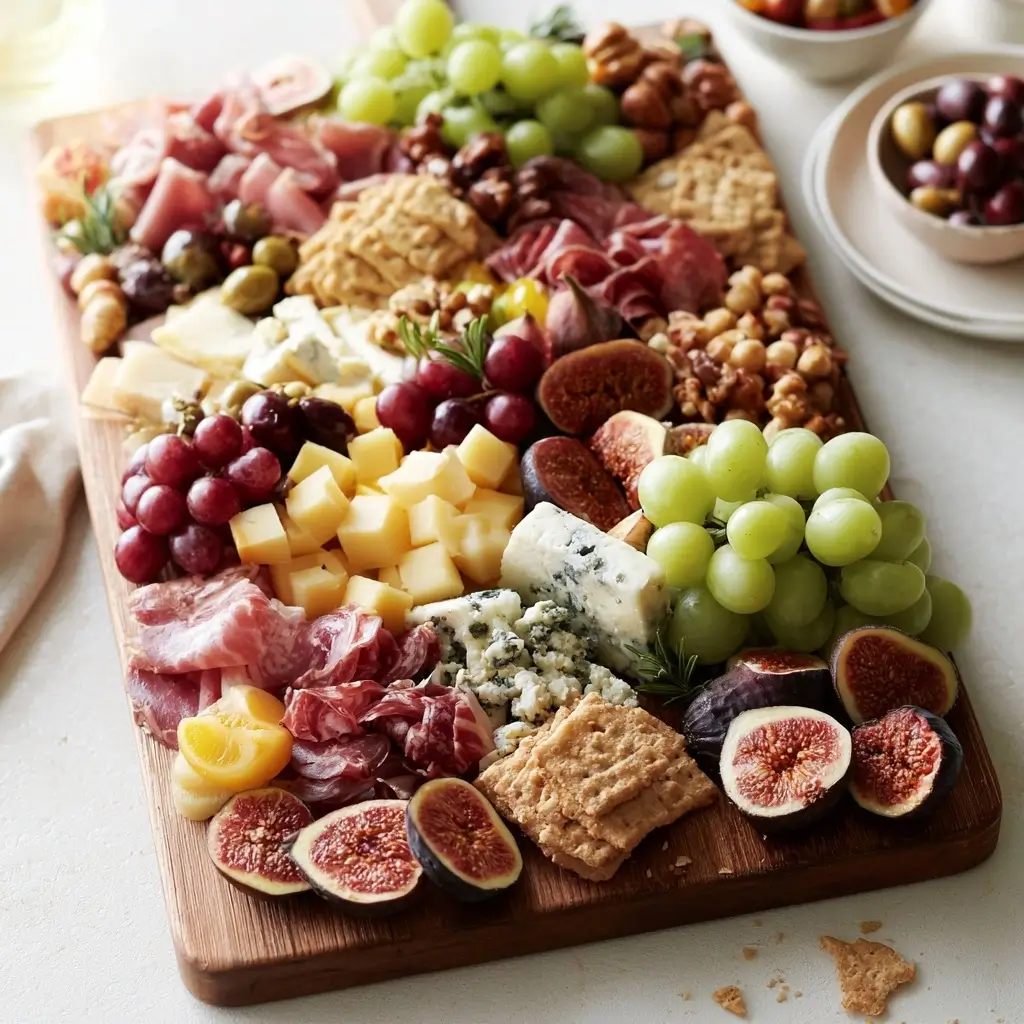
If you are building your first board, the 3-3-3 method makes it feel simple and stress-free. This Charcuterie Board Guide helps you mix flavors, textures, and colors in a way that looks beautiful and feels easy to serve.
Charcuterie Board Guide
Equipment
- 1 Wooden board or serving tray
- 1 Serving knife optional
Ingredients
Main Board Components
- 3 cheeses such as cheddar, gouda, brie, goat cheese, or havarti
- 3 cured meats such as salami, turkey pepperoni, roast beef slices, or turkey slices
- 3 extras such as grapes, berries, olives, pickles, nuts, crackers, sliced baguette, or dried fruit
Optional Garnishes
- 1 fresh herbs optional, for color and fragrance
- 1 honey or fruit spread optional, for a sweet touch
Instructions
- Pick a wooden board, serving tray, or large platter. A bigger surface gives you more room to spread items out and create a pretty layout.
- Arrange the three cheeses in different areas of the board. Leave space between them so the rest of the ingredients can fill in naturally.
- Fold or loosely roll the meats, then place them near the cheeses. Vary the shapes a little so the board looks relaxed and inviting.
- Add the fruit, olives, pickles, nuts, and crackers around the board. Tuck smaller items into open spaces to make the board look full without feeling crowded.
- Add herbs, honey, or fruit spread if using. Step back and check for balance, then adjust colors and spacing until the board feels complete.
Notes
Why You’ll Love This Charcuterie Board Guide
The 3-3-3 method gives you a friendly structure, so you are never staring at an empty board wondering what to add next. It is flexible, quick to assemble, and easy to adjust for the number of guests you are serving.
It also works well because every bite feels balanced. You get something savory, something creamy, something fresh, and something crunchy, all in one place.
Charcuterie Board Guide Ingredients & Substitutions
Use this simple mix as a starting point, then swap based on what you have on hand.
- 3 cheeses, such as cheddar, gouda, brie, goat cheese, or havarti
- 3 cured meats, such as salami, turkey pepperoni, roast beef slices, or turkey slices
- 3 extras, such as grapes, berries, olives, pickles, nuts, crackers, sliced baguette, or dried fruit
- Fresh herbs, optional, for color and fragrance
- Honey or fruit spread, optional, for a sweet touch
Substitution ideas are easy here. If you prefer a lighter board, add more fruit and vegetables. If you want more crunch, use breadsticks, seeded crackers, or toasted pita chips.
Step-by-Step Instructions to Make Charcuterie Board Guide
Step 1: Choose your board
Pick a wooden board, serving tray, or large platter. A bigger surface gives you more room to spread items out and create a pretty layout.
Step 2: Place the cheeses first
Arrange the three cheeses in different areas of the board. Leave space between them so the rest of the ingredients can fill in naturally.
Step 3: Add the meats
Fold or loosely roll the meats, then place them near the cheeses. Vary the shapes a little so the board looks relaxed and inviting.
Step 4: Fill in with extras
Add the fruit, olives, pickles, nuts, and crackers around the board. Tuck smaller items into open spaces to make the board look full without feeling crowded.
Step 5: Finish with the small touches
Add herbs, honey, or fruit spread if using. Step back and check for balance, then adjust colors and spacing until the board feels complete.
Tips for Success
Start with room temperature cheese when possible, since it tastes better and is easier to spread. Choose a mix of soft, semi-soft, and firm cheeses to keep the board interesting.
Also, think about color. Bright fruit, green herbs, and a few dark olives make the whole board look more inviting.
Variations of Charcuterie Board Guide
You can tailor this board to the season or the occasion. For a breakfast version, use cheese, sliced fruit, nuts, muffins, and yogurt dip.
For a dessert-style board, add chocolate squares, strawberries, cookies, marshmallows, and sweet spreads. You can also make a vegetarian board by skipping the meats and adding roasted vegetables, hummus, and extra fruit.
Serving Suggestions: What to Pair with Charcuterie Board Guide
Serve this board with sparkling water, iced tea, fresh lemonade, or a fruit spritzer. It also pairs nicely with soups, simple salads, and warm bread if you want to turn it into a fuller spread.
Storage & Reheating Instructions
Charcuterie boards are best served soon after assembling. If you have leftovers, store the cheese, meats, and fresh produce in separate airtight containers in the refrigerator.
Most items do not need reheating. Let the cheese sit out briefly before serving again so the flavors come back to life.
Memories Made Around the Table
Some of my favorite gatherings have started with a simple board placed in the center of the table. People naturally lean in, talk, nibble, and make their own perfect bite, which always feels warm and welcoming.
FAQs
What is the 3-3-3 method for a charcuterie board?
It means choosing 3 cheeses, 3 meats, and 3 extras. The formula keeps the board simple while still giving you variety.
How much should I buy for a small group?
For 4 to 6 people, a modest board with about 3 to 4 ounces of cheese per person is usually enough, especially when you add crackers and fruit.
Can I make this board ahead of time?
Yes, you can prep the items a few hours ahead. For best texture, keep crackers and bread separate until just before serving.
What should I do if my board looks empty?
Add small fillers like grapes, nuts, herbs, or extra crackers. These little items help the board feel abundant and complete.
Final Thoughts
This Charcuterie Board Guide is proof that a beautiful appetizer does not have to be complicated. Once you learn the 3-3-3 method, you can build a board that feels effortless, personal, and always ready for sharing.